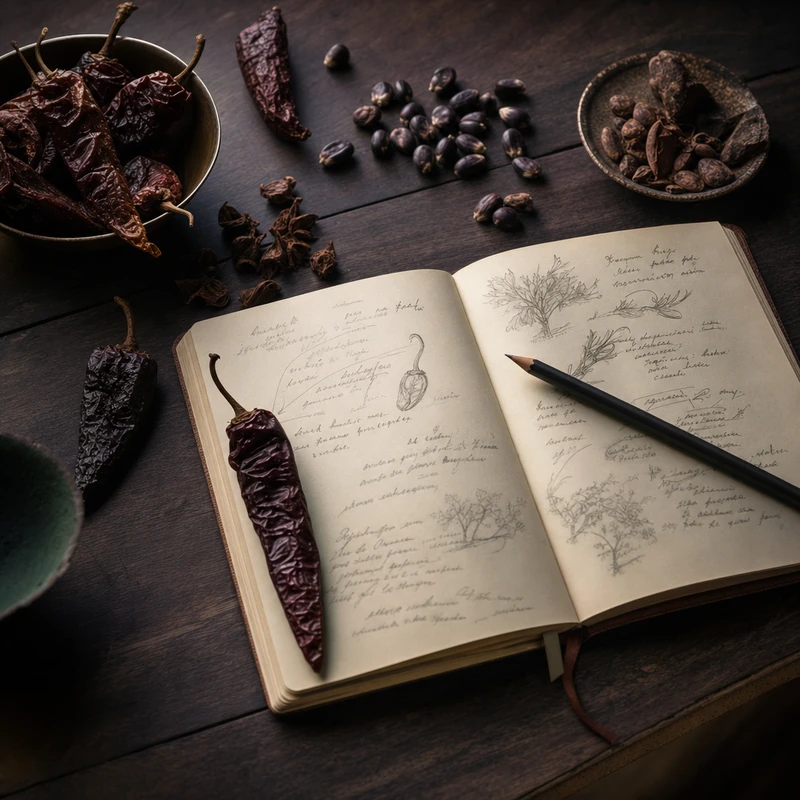
Sabores do Peru is an independent editorial resource dedicated to Peru's gastronomy, ingredients and geography. Every entry is researched and written to explain, precisely, the logic behind a dish, a technique or a region.
What this site is
This site is an editorial space centered on Peruvian cuisine: its dishes, its ingredients and the regions they come from. Every entry documents one concrete culinary topic, with the same research standard from start to finish.
Content is written editorially and anonymously, not attributed to any particular chef, owner or public figure.
How content is made
Every entry starts from checkable sources on ingredients, techniques and regional traditions of Peru. When a historical or cultural claim appears in the text, it is checked before publishing. The site favours precision over exhaustiveness: where reliable information on a topic is missing, it is left out rather than filled in with assumptions.
Languages
The site publishes in Portuguese and Spanish, depending on the page, alongside this English homepage. The Spanish-language entries keep their original URLs and language, so existing links to that content don't break.
How topics are chosen
Every topic is chosen for its informational value, not for a passing trend. A dish earns an entry because it has a history, a technique or a regional origin worth explaining in detail — not because it is circulating on social media at a given moment.
Priority goes to dishes and techniques that tend to be poorly explained, or explained incompletely, elsewhere: recipes reduced to a list of steps with no context, or claims about geographic origin repeated without verification. The aim of every entry is to close that gap, not simply add another article on the same topic.
Scope of the content
This site covers gastronomy, ingredients, cooking techniques and cultural geography of Peru, always from an informational angle: a dish's origin, its technique and its regional context.
The focus stays on the dish, the ingredient or the region — never on a particular business or establishment.
Corrections and accuracy
Culinary and cultural information evolves: a technique documented one way can have regional variants not covered in a first draft, or a historical claim can be refined by new evidence. When that happens, the entry in question is revised and updated, rather than left outdated indefinitely.
The site would rather acknowledge the limits of what it can state with confidence than present a simplified version as the only correct one. Many dishes in this collection, starting with ceviche itself, have more than one legitimate regional tradition, and the text tries to reflect that plurality rather than flatten it.
Editorial independence
Every entry is chosen and written to the same standard: informational value first, with no commercial arrangements with brands, suppliers or establishments shaping what gets published.
That independence also extends to how dishes are described. An entry doesn't overstate a recipe's difficulty to sound more impressive, or smooth over steps that genuinely need care, like ceviche's marinating time or pachamanca's underground heat management. Practical usefulness matters more than surface appeal, even when that means a slightly less flashy entry than the alternative.